Any experience is good experience..

Ive always had an interest in attention to detail in fashion styling. I love the aesthetic of a perfect shot; taking into account the composition, lighting, depth of field and backgrounds.

With my Father owning a floristry company called Browns London, he is constantly looking to update his website with new seasons flowers and promotions. His past shoots for the website have been simple square headshots of bouquets, all pretty uniform on the website. However he is looking to take a more informal, irregular approach. By photographing the flowers in a home setting, consumers will get to see what they will look like in a home environment, also creating a more personal feel.

Men being men, (stereotypical as it may be) lack attention to detail so I decided to go along for some photography and styling experience, mainly to assist with the finer details of the shots.

IMG_1513.jpg

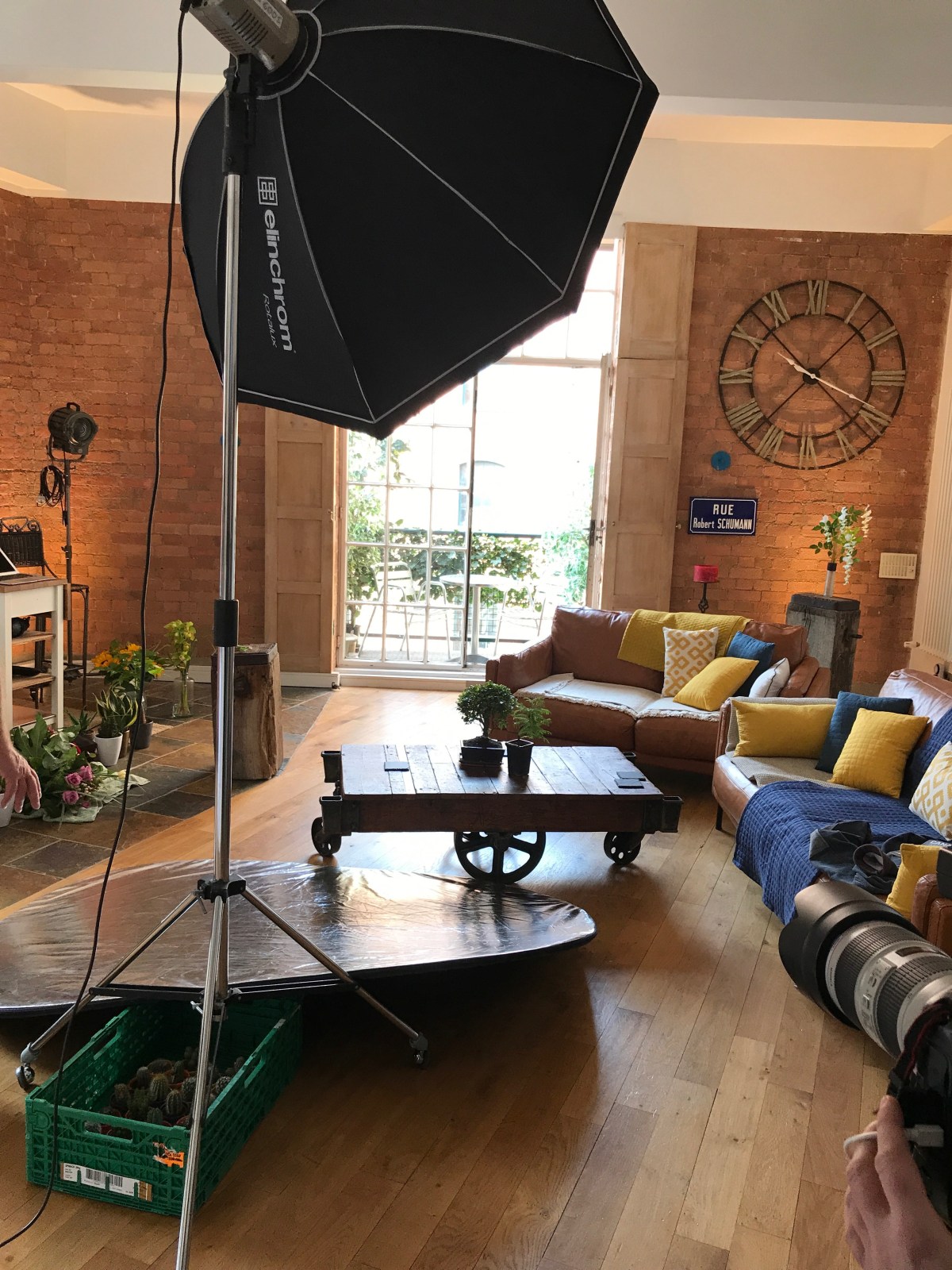
The studio was perfect for the aesthetic we were aiming to create. I could practise my use of the light metre and aperture for the perfect lighting. I played around with composition and background setting to unsure each shot was slightly different to create a more visually interesting web page.

I have inserted a few of my favourite shots from the day below:

-kirsty

Penhaligons Portraits- Storytelling

Creating a narrative behind a brand is essential to build an emotional connection between consumer and product. Particularly in fragrance, the ingredients and descriptions of a scent aren’t usually something the average shopper can relate to, so stories can be used to help describe the mood, occasion and emotions that the scent depicts. Gorilla perfumer Mark Constantine says, “perfumery is an expression of things that have happened to us, or things we feel emotionally attached to”. The minute a consumer puts an emotion or time to a smell, the have memory of it.

Following an industry conference with Nick Gilbert, I gained some valuable insights into the reasons behind storytelling. He began by explaining how it has a wide influence on how consumers purchase and connect with the brand. He stressed that packaging has no persuasive characteristics on the consumer so it’s important to create a story that becomes a reason for the consumer to buy into the brand. “Fragrance communication is difficult so each bottle must belong a story that can be sold to a customer”

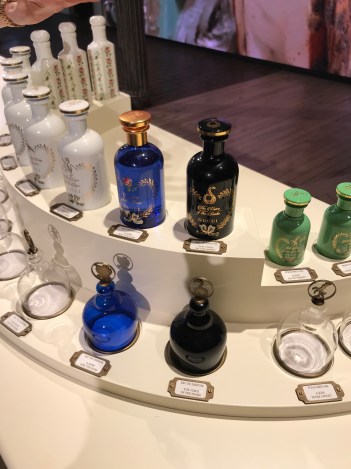
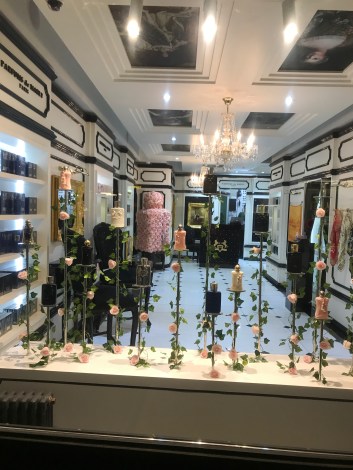
Penhaligons fragrances is a great example of this. This collection is dedicated to curious representatives of the British aristocracy. With dramatic names like ‘The Revenge of Lady Blanche’ and ‘Much Ado About the Duke’, they are suited to stylish bottles with gold-plated animal heads as stoppers. IMG_1416
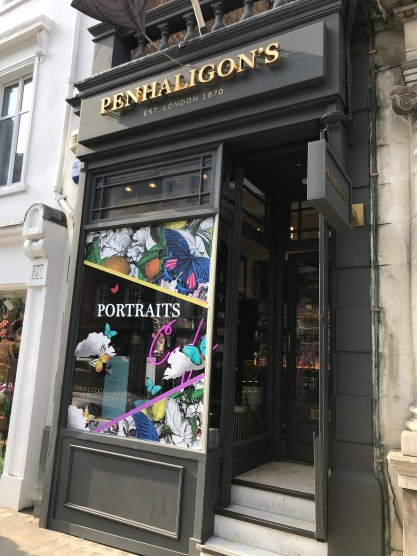
“Portraits” is a tribute to the English spirit; between establishment, humour and provocation”

The new collection consists of four parfums, represented as family members. The Stag figure describing the curious, mythical father, The Bear who draws on narcissus, iris and hyacinth to paint a portrait of his wife a social butterfly who hides a terrible secret. The Coveted Duchess Rose, the daughter who is married to eccentric and freedom-loving Duke, represented by the rosy-leathery fragrance named Much Ado About the Duke.
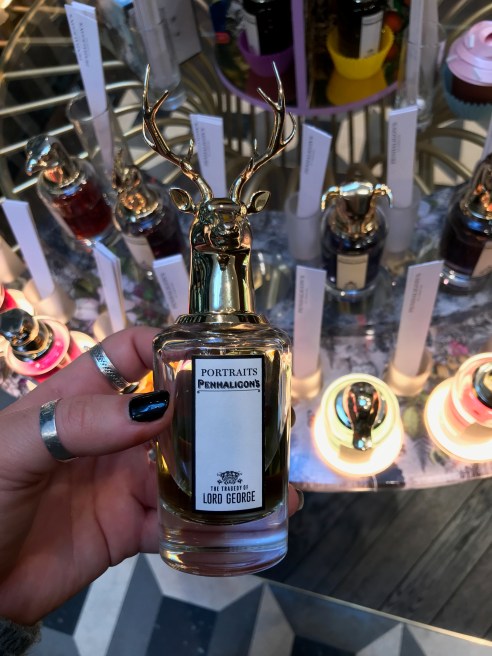
IMG_1418.jpg

Within stores, this collection is presented in an afternoon tea situation. Each fragrance belongs in a cupcake case layered in tiers for different courses. The array of olfactive treats are on the menu, including two citrus scented cocktails. A developed palate is a must to detect the hints of mandarin, petit grain and patchouli. The illustrated packaging and intricate detailed bottles require a consumer who is engaged in the stories behind fragrance, creating a personal connection as the story suggests how the scent was formed.
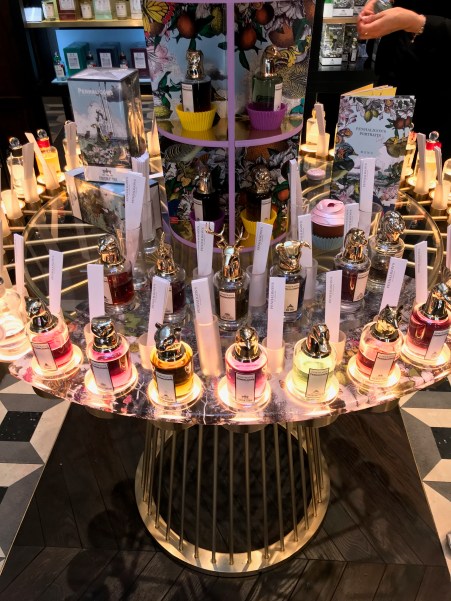
IMG_1417

Penhaligon’s also offer an Instagram (@Penhaligons_Portraits) which presents a quiz which determines which character suits the consumer most. For consumers which buy into the brand, it adds another dimension of connecting on an individual level as well as creating a special, personalised fragrance. Using social media is a good method of gaining interest into the new collection and receiving an increase in younger generations researching into the brand.
Perfumery is a form of art- Fredric Malle

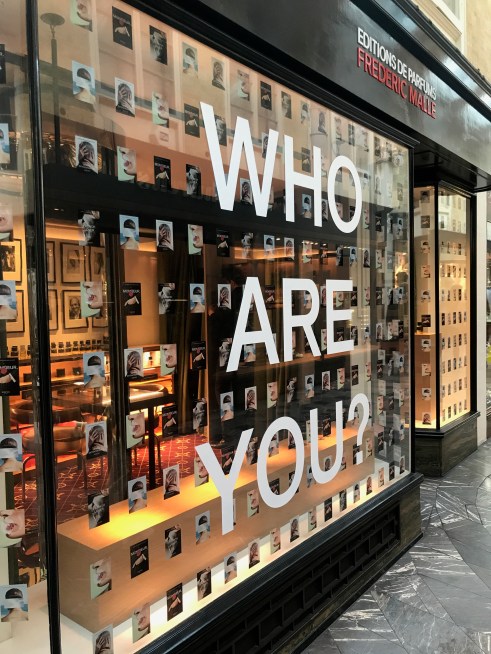
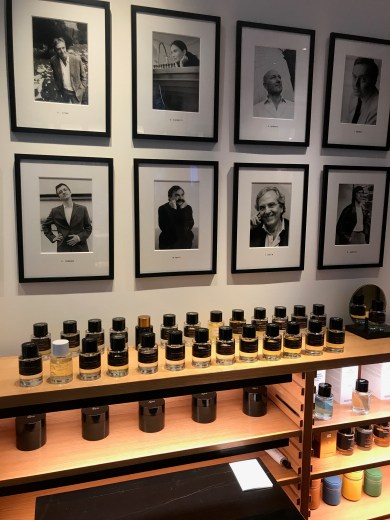
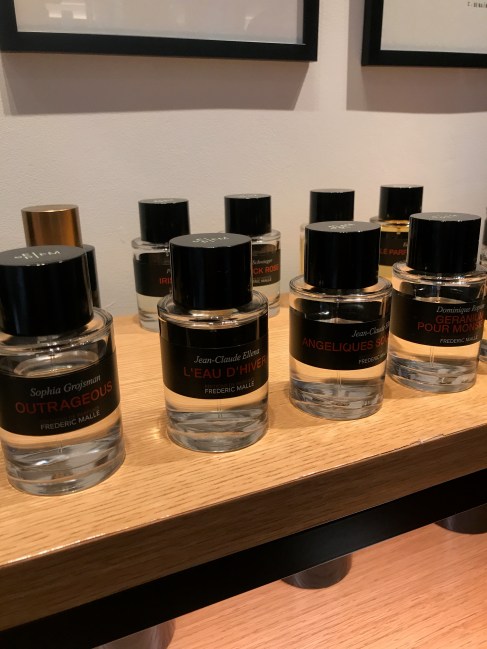
Frederic Malle has created the biggest revolution in perfumery since the introduction of synthetic ingredients. His idea behind his fragrance collection, Les Editions de Parfum Frédéric Malle, was to give perfumers free rein to create a fragrance that was personal to them. He showcased the collaborations through displaying the perfumers name on the bottle and in the shops, creating a large movement in the fragrance industry as many perfume houses hid the behind the scenes in the labs. He wanted the noses to be known for their creativity.

“I was determined to liberate perfumers from the kinds of restraints often imposed by marketers and focus groups. I work as an editor who works with writers.”

IMG_1398

This statement suggests Malle’ idea was to change the way fragrance industries present perfume and to show off the pride take when creating the scent. The freedom drives the artist to construct a scent without conventional boundaries and to refine their chosen scent to precise detail. He sees this process as a work of art representing the best of each perfumer.

IMG_1399

“I give these ‘fragrance authors’ complete freedom to explore and express their ideas.”

The best-loved fragrance within the collection is ‘Portrait of a Lady’, by Dominique Ropion. The velvety combination of oriental rose, frankincense and blackcurrant is like red lipstick, or black lace: bold, theatrical and un-apologetically feminine. With Malle having that personal connection with the fragrance author allows consumers to understand the concept and story behind the creation.

The fragrances are displayed in his boutiques, which each have their own personality whilst sharing certain essential characteristics. They combine the comfort of an elegant home with the clinical design of a fragrance laboratory. All introduce Frédéric Malle’s own signature smelling columns and refrigerated perfume cabinets.

IMG_1400

Eden Perfumes- A Vegan alternative

Whilst I was wondering the lanes of Brighton yesterday, I came across an interesting store that caught my eye because of our upcoming module, hence my reasoning to write a quick blog post about it.

As I learnt from listening to the ‘Making Scents- The story of Perfume’ podcast, many perfumes contain different types of animal extracts, that have controversial opinions as to whether they were sourced humanely. However, Eden’s perfumes are 100% vegan, botanical and cruelty free, they are crafter with respect to the planet and all beings. They use no harmful synthetic preservatives, parabens or phthalates.

Eden perfumes save on packaging and marketing and focus on creating a good perfume made to 15% intensity. All the fragrances are Eau de Parfum and NOT Eau de toilette, leaving a strong scent for 8 or so hours on skin and up to 3 days on clothes. They are oil based perfumes allowing them to last even longer. Eden perfumes are made to be equivalents to our favourite designer perfumes & aftershaves but they are labeled by number and have simple bottles, creating a quality perfume but for a fraction of the price because you’re not paying for the fancy brand name.

I personally think this is a very clever, sustainable idea and particularly appeals to me because of the ridiculous mark ups that companies put on fragrance, making a huge dent in our pockets. Whilst chatting to the shop assistants to get this information, I sampled my favourite perfume, Alien by Thierry Mugler and its safe to say it smelt identical and lasted for a very long time.

1st Module reflection

When I look back on last term and what I’ve learnt, the breadth of information is somewhat overwhelming. However i’d say the two main characteristics I’ve developed and built upon is teamwork and critical thinking.

In secondary school, academic studies were very much individual with little group projects. Even in art foundation, the course was sketchbook based and art from the occasional photoshoot, work was very much your own. However, coming to study FCP at Nottingham Trent has definitely helped me learn the art of patience and perseverance when working in a team. Obviously the groups were allocated so you did not know who you’d be working with from task to task, nor did you have a choice (which i think was a positive learning curve because you don’t get to choose your colleagues in the work place) but people didn’t always pull their weight or were willing to listen to other peoples ideas and opinions. Im really glad I’ve had this experience as teamwork is essential in the field of work this degree will steer me into and from working with all sorts of people you might not meet eye to eye with, it has certainly taught me confidence, patience, encouragement and the group work and live projects in the next module will continue to do so.

The second most important trait I believe I’ve picked up since the beginning of the course is a critical eye. Especially in New york, after learning the FCP process, I constantly found myself questioning the reasoning behind a brand outcome-thinking, Was there a better way of doing that? or Does that really appeal to me or their target audience? I find myself being far more critical than I used to be and have started the inevitable shift from consumer to critique!

-Kirsty

My thoughts on House of Z

House of Z is a documentary on the life of Zac Posen, globally for his technique in artisanal craftsmanship, anatomical construction and textile manipulation and his beautifully made cocktail dresses and ballgowns.

The documentary takes you through Zac’s career in chronological order. It starts off by showing snippets of his childhood, old videos and interviews with relatives. Some of the videos show Zac as a small child making hats and expressing his creativity with his artistic family at such a young age. Zac’s Father was a painter, he painted realist art with fabrics. Zac said the idea of draping fabric over a form was always in his nature because of his Father’s work, introducing him to pattern making. Zac felt like he didn’t fit in in normal school, he was dyslexic and not academic. He joined Saint Ann’s high school, it had no rules and encouraged creativity and individuality. This is where he became inspired. Zac then started interning and the Metropolitan Museum. By this point, he was obsessed with fashion and had his eyes set only on Central Saint Martins. This is where he caught the eye of celebrities such as Naomi Campbell.

‘In our household, creativity and imagination was a religion’- Zac’s Mother (Susan Posen)

Zac’s career set off when he set his heart on making a fashion house. He brought this dream to reality and set up a studio in his living room. He became a ‘Force in American fashion’. Celebs here there and everywhere were wearing ‘Zac Posen’. However, he started to realise that the perception of his wasn’t actually the reality and he was living it because he was feeding the beast. He was thriving off the things people were saying about him and needed to be brought back to earth. The more money he gained, the bigger buzz the shows expressed. Zac started listening to his design team and higher celebs rather than his Mother and Sister that were there at the beginning. His designs went from being beautiful, carefully cut dresses to bigger, untasteful garments to please publicity. A much more theatrical approach was taken. The recession then hit. Brands were cutting back on expenses, Zac had less money available to him to less money to spend on his materials. He had run out of capital. Zac then left for Paris, however he received bad press here also. People that he looked up to began to say he had come into fame too early and lost touch with the reason he became a designer in the first place. Posen brainstormed  in a bid to bring his career back to life. He created only 25 designs for a show in New York, an incredibly small amount because the common amount of garments for a collection is 35-75. The show was a success and Posen’s company began to make money yet again.

I really enjoyed this documentary, it really put emphasis on the fact that you should follow your passions but not forget your roots. Posen hit fame at a very young age and hadn’t had time to mature in himself, he let popularity and the need to fit in get to his head and he forgot about the people who helped him get there in the first place. This documentary confirms the stereotypes of the fashion industry being very cut throat and smoke and mirrors however suggests that being true to yourself can go a long way.

-Kirsty

The Conversation- Perfume makers

This podcast starts off by expressing the power of scent and its ability to transport you to a particular place, person or time

The podcast featured a couple of guest speakers, Shyamala Maisondieu and Caroline Gaillardot. Shyamala introduces herself as a fine fragrance perfumer originally from Malaysia, who now works for Givaudan in Paris, one of the world’s largest perfume manufacturers. Shyamala says her childhood in south-east Asia influenced the scents she is drawn to, from frangipani blossoms to jasmine and ginger. She has dreamed up fragrances for brands such as Tom Ford and Comme des Garçons. Caroline Gaillardot is a perfumer who specialises in creating scents for beauty care products, including shampoos, shower gels and deodorants. She was born in Grasse, France (the worlds capital of the perfume industry), although she says she wanted to become a perfumer simply because she always loved to smell. She now works for Mane in southern France, which is one of the global leaders in the industry.

This podcast was a lot less informative than the last, it chats a lot more about the two guest speakers family history and how they grew to become perfumers. They suggest that a perfumer has come from a particular background. In history, with Grasse being the perfumery capital, many of the businesses were owned by Grasse families, however nowadays they are seeing a vast variety from different backgrounds wanting to be perfumers, not just because its been passed down in the family.

Typically perfumers are referred to as ‘noses’. Later on in the podcast they start to explain the methods they used to train their noses to remember over 1,000 scents. They try to associate each scent with a time or memory in their lives in order to trigger something in their minds so they remember the scents as a sort of, alphabet. The guest speakers then talk about that their process after being given a brief is. In order to be a successful perfumer, you must take into account the brand, the target audience, key points for example ‘is there a key ingredient e.g. Vanilla?’, even things such as bottle colour or shape. For fine fragrance, Caroline explains that the shortest time after getting her brief to having the final product was 6-8 month, so its a very long process.

Making scents- The story of Perfume

Podcast narrated by Bridget Kendall, featuring guest speakers Lizzie Ostrum, Luca Turin and Thomas.

Luca Turin defines fragrance as a ‘chemical poem’. A work of art done by arranging chemicals that each have their own smell, in order to deliver an impression an idea or a feeling.

Most people think of fragrance as a beauty product of a morning or evening ritual thats based on vanity, this shouldn’t be the case. Perfume can be about anything from religion, hospitality, seduction etc. The earliest perfumes start as incense and is much more to do with ritual and worship.

The molecules in perfume are only soluble in oils, therefore the ancient was of extracting scents was to place flowers onto fatty substances and the scents would be absorbed, and that would then have to be extracted from the fats. Animal extracts are also the basis of the perfume industry. There are four main animal extracts- Musk (native to Tibet parts of India and China) Castoreum (comes from the beaver) Civet (produced from the anal glands of a civet cat) Amber grease (comes from the sperm whale). However, a lot of synthetic musks are now used because of a controversy about the non-ethical ways in which these animal extracts are sourced.  A lot of synthetic scents were discovered by accident for example musk discovered by Albert Bauer when attempting to create a TNT explosive, and Coumarin by William Perkin.

The 20th century is there perfume as we know it came to be, with the main factor being the discovery and exploration into consumer culture. Complex advertising and marketing has played an enormous part in the growth of the perfume industry.

Day 5- New York

Day 5 started off with the nicest breakfast from ‘Two Hands’ in Lower Manhattan, I had my first healthy meal of the week, an açai bowl. Next stop was the Glossier show room, I loved the interior of the store and layout of the products.

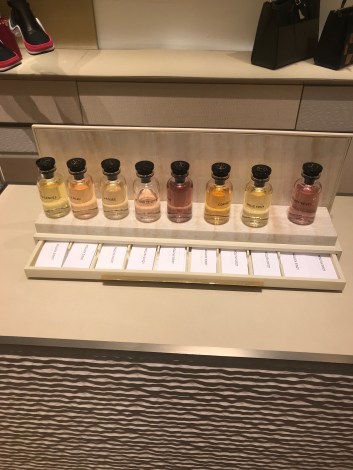
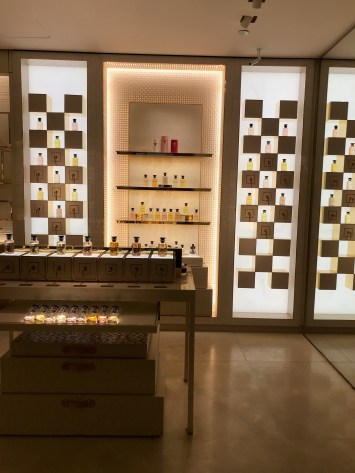
We then ventures to SoHo and had a browse in the designer flagship stores such as Gucci, Louis Vuitton, Celine, Maison Margiela etc. This was my favourite part of the day/week. I loved looking and exploring the way each brand had chosen their methods of visual merchandising to suit their brand story. For example, Celine’s store was clean cut and minimalistic, Dior was feminine and graceful and Gucci was bursting with colour and pattern.

-Kirsty